tech3Support
A place where we can dump all the technical information overload and anything else that they need to know.
Sunday, May 20, 2012
Monday, April 23, 2012
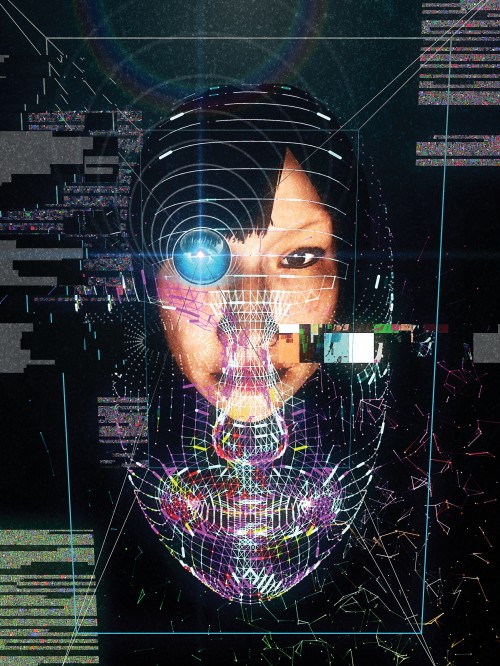
Robots and Avatars
Your colleagues and friends of the future are likely to be robots and avatars.
Led and conceived by body>data>space, this innovative project explores how young people will work and play with new representational forms of themselves and others in virtual and physical life in the next 10-15 years.
It examines multi-identity evolutions of today’s younger generations within the context of a world in which virtual and physical spaces are increasingly blended.
The Robots and Avatars Exhibition presents at FACT, Liverpool (UK) from 16 March to 27 May 2012, and will tour onwards to AltArt, Cluj-Napoca (Romania) and KIBLA (Slovenia) in 2012.
The exhibition presents immersive experiences – from physical limbs rendered into pixels through the act of touch, collaborative landscapes stretching beyond the confines of popular gaming, to wearable and interactive technologies that guide and confound, including a new Commission developed in collaboration with the National Theatre: “Visions of our Communal Dreams”.
![]() |
| tech3Support |
Saturday, March 31, 2012
Intel Ivy Bridge Chips
Your wait is almost over for the next-generation chip, Ivy Bridge. The new chip from Intel promises better battery life and performance improvements.
Ivy Bridge processors should be announced in the 4th week of April, between April 22 and April 28. The announcement will include only quad-core models: mobile Core i7 and Core i7 Extreme families, desktop Core i7, Core i5-3570K, i5-3570T, i5-3550, i5-3550S, i5-3450 and i5-3450S. The announced chips will be available for sale on April 29, and the reviews and benchmarks should be published on the same day.
Dual-core Ivy Bridge Core i3 chips are expected later in the year, in the third quarter--just in time for holiday shopping.
Intel calls Ivy Bridge a tick+. While CPU performance steps forward, GPU performance sees a more significant improvement - in the 20 - 50% range.
Perfect for ultrabooks and smoking fast laptops.
PCWorld
AnandTech
CPU World
Ivy Bridge processors should be announced in the 4th week of April, between April 22 and April 28. The announcement will include only quad-core models: mobile Core i7 and Core i7 Extreme families, desktop Core i7, Core i5-3570K, i5-3570T, i5-3550, i5-3550S, i5-3450 and i5-3450S. The announced chips will be available for sale on April 29, and the reviews and benchmarks should be published on the same day.
Dual-core Ivy Bridge Core i3 chips are expected later in the year, in the third quarter--just in time for holiday shopping.
Intel calls Ivy Bridge a tick+. While CPU performance steps forward, GPU performance sees a more significant improvement - in the 20 - 50% range.
Perfect for ultrabooks and smoking fast laptops.
PCWorld
AnandTech
CPU World
Saturday, March 17, 2012
©opyright Math (TM)
Comic author Rob Reid unveils Copyright Math (TM), a remarkable new field of study based on actual numbers from entertainment industry lawyers and lobbyists.
Friday, March 2, 2012
Practical Qubit Computers
Scientists at IBM Research have achieved major advances in quantum computing device performance that may accelerate the realization of a practical, full-scale quantum computer. For specific applications, quantum computing, which exploits the underlying quantum mechanical behavior of matter, has the potential to deliver computational power that is unrivaled by any supercomputer today.
How Quantum Computing Works
The most basic piece of information that a typical computer understands is a bit. Much like a light that can be switched on or off, a bit can have only one of two values: “1″ or “0″. For qubits, they can hold a value of “1” or “0” as well as both values at the same time. Described as superposition, this is what allows quantum computers to perform millions of calculations at once.
One of the great challenges for scientists seeking to harness the power of quantum computing is controlling or removing quantum decoherence – the creation of errors in calculations caused by interference from factors such as heat, electromagnetic radiation, and materials defects. To deal with this problem, scientists have been experimenting for years to discover ways of reducing the number of errors and of lengthening the time periods over which the qubits retain their quantum mechanical properties. When this time is sufficiently long, error correction schemes become effective making it possible to perform long and complex calculations.
IBM has created a high-coherence 3D qubit that retains its state for up to 100 microseconds, or 0.1 milliseconds. This is stable enough that engineers can now shift their focus to scaling up the number of qubits to create a quantum logic computer.
How Quantum Computing Works
The most basic piece of information that a typical computer understands is a bit. Much like a light that can be switched on or off, a bit can have only one of two values: “1″ or “0″. For qubits, they can hold a value of “1” or “0” as well as both values at the same time. Described as superposition, this is what allows quantum computers to perform millions of calculations at once.
One of the great challenges for scientists seeking to harness the power of quantum computing is controlling or removing quantum decoherence – the creation of errors in calculations caused by interference from factors such as heat, electromagnetic radiation, and materials defects. To deal with this problem, scientists have been experimenting for years to discover ways of reducing the number of errors and of lengthening the time periods over which the qubits retain their quantum mechanical properties. When this time is sufficiently long, error correction schemes become effective making it possible to perform long and complex calculations.
IBM has created a high-coherence 3D qubit that retains its state for up to 100 microseconds, or 0.1 milliseconds. This is stable enough that engineers can now shift their focus to scaling up the number of qubits to create a quantum logic computer.
Thursday, February 23, 2012
Microbial Home Probe Project
The ‘Microbial Home’ project is part of the Philips Design Probes program, which was established to explore far future lifestyle scenarios based on rigorous research in a wide range of areas. This new forward looking group of design concepts represent an innovative and sustainable approach to energy, waste, lighting, food preservation, cleaning, grooming, and human waste management.
The Probe suggests that we should move closer to nature and challenges the wisdom of annihilating the bacteria that surround us. It proposes strategies for developing a balanced microbial ecosystem in the home.
Microbial Home concepts
The larder concept is a system designed to keep ‘living food’ fresh, by using natural processes (as opposed to dead food in the refrigerator). The larder consists of an evaporative cooler and vegetable storage system built into a dining table.
“All that is lacking is a collective change in consciousness to take us into a Biological Age; one where materials can repair themselves and where by-products are no longer waste but fuel for other systems. We are going to live through this epoch change whether we choose to or not. Failure to adjust our thinking, and with it our behaviors, will force the earth to exercise its self-correcting mechanisms over us.”

The bio-light uses different biological technologies to create ambient light effects. The concept explores the use of bioluminescent bacteria, which are fed with methane and composted material (drawn from the methane digester in the Microbial Home system). Alternatively the cellular light array can be filled with fluorescent proteins that emit different frequencies of light.
Phillips – Design
The Probe suggests that we should move closer to nature and challenges the wisdom of annihilating the bacteria that surround us. It proposes strategies for developing a balanced microbial ecosystem in the home.
The urban beehive is a concept for keeping bees at home. The beehive is designed to allow us a glimpse into the fascinating world of these industrious creatures and to harvest the honey that they produce.
- Bio-digester island
- Larder
- Urban beehive
- Bio-light Apothecary
- Filtering squatting toilet
- Paternoster plastic waste up-cycler
“All that is lacking is a collective change in consciousness to take us into a Biological Age; one where materials can repair themselves and where by-products are no longer waste but fuel for other systems. We are going to live through this epoch change whether we choose to or not. Failure to adjust our thinking, and with it our behaviors, will force the earth to exercise its self-correcting mechanisms over us.”

The bio-light uses different biological technologies to create ambient light effects. The concept explores the use of bioluminescent bacteria, which are fed with methane and composted material (drawn from the methane digester in the Microbial Home system). Alternatively the cellular light array can be filled with fluorescent proteins that emit different frequencies of light.
Phillips – Design
Sunday, February 12, 2012
NASA Power Downs Last Mainframe
This month marks the end of an era in NASA computing. Marshall Space Flight Center powered down NASA’s last mainframe, the IBM Z9 Mainframe.
Saturday, February 4, 2012
Sunday, January 29, 2012
TED Talks about Robots

When TED talks about Robots, we listen. Hizook, {the robotics news portal} has put together a compendium of TED talks about robotics, all on one page. Good job Mr. Deyle, and thank you for sharing.
TED is a private non-profit foundation. The goal of the foundation is to foster the spread of great ideas. It aims to provide a platform for the world’s smartest thinkers, greatest visionaries and most-inspiring teachers, so that millions of people can gain a better understanding of the biggest issues faced by the world, and a desire to help create a better future. Core to this goal is a belief that there is no greater force for changing the world than a powerful idea.
Sunday, January 22, 2012
Soundmachines
Rather clever device or as they have called it, an instrument for performing electronic music.
Three units, which resemble standard record players, translate concentric visual patterns into control signals for further processing in any music software. The rotation of the discs, each holding three tracks, can be synced to a sequencer.
This is what you get:
Three units, which resemble standard record players, translate concentric visual patterns into control signals for further processing in any music software. The rotation of the discs, each holding three tracks, can be synced to a sequencer.
This is what you get:
Subscribe to:
Posts (Atom)